
If you are a 40 to 50-year-old female, you may wonder why everything suddenly seems to be aching. As a physio, a large part of my day is spent trying to help the 40+ age females cope with a multitude of muscle, tendon and bone issues that have crept upon them as they approach Menopause. So what’s going on?
For most females, oestrogen levels start to decline from about 40 with this phase known as perimenopause and females officially hit Menopause 12 months after their last period.
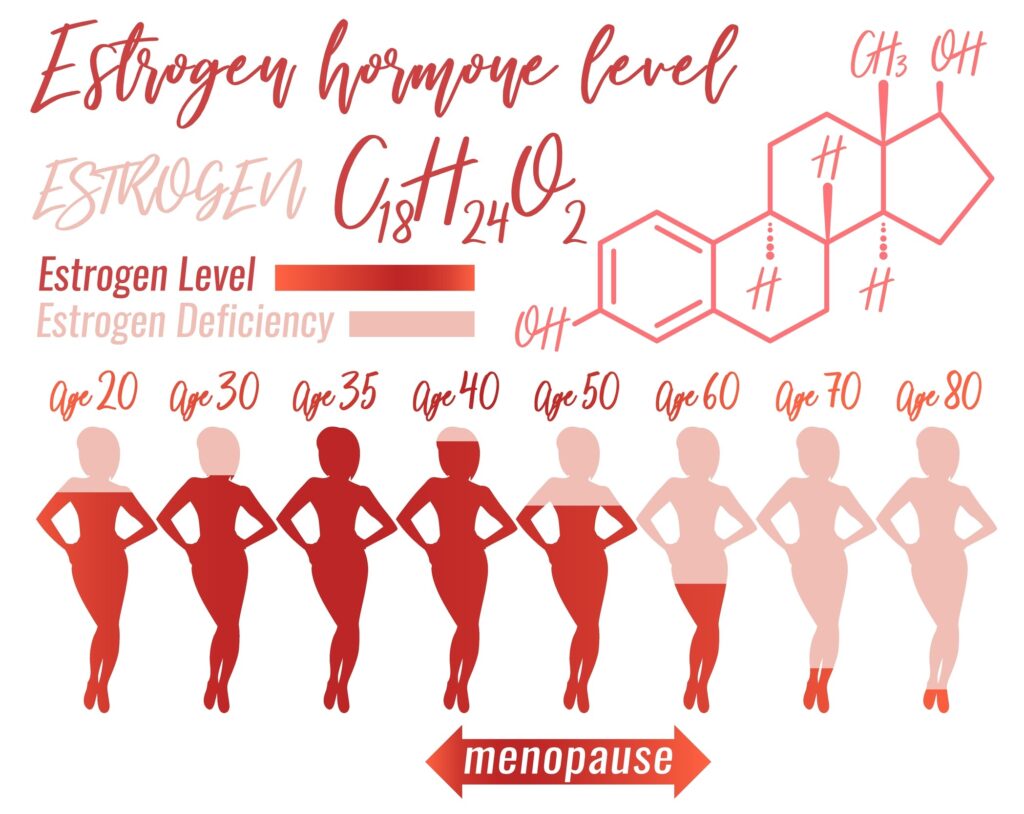
Oestrogen has widespread effects throughout the body and is particularly important for the structure, function and strength of our bones, muscles, tendons and ligaments.
Effects of Menopause on muscles:
Oestrogen has a direct impact on muscle mass and strength. Many women who have remained active, may start sustaining injuries despite not changing their activity level. The reduction in strength, unfortunately, includes pelvic floor muscles. Urinary and or faecal incontinence can become an issue despite years of being symptom-free following childbirth. Core muscles that support the spine are also impacted, and posture can deteriorate. (1)
Impact of Oestrogen levels on tendons and ligaments.
Oestrogen affects the collagen or elastic component of our ligaments and tendons. Our ligaments join bone to bone, and our tendons join muscles to bone. Both structures become stiffer as oestrogen levels drop. Stiffer ligaments can benefit those extra stretchy people with too much joint mobility. Stiffer tendons, however, have less capacity to cope with compression and high load and become vulnerable to injury. Tendinopathy is very common after Menopause, particularly in the glutes, hamstrings and Achilles and shoulder rotator cuff tendons. Pain will be felt in the outer hip, sit bones, back of ankle and shoulder (1).
Migraines and Headaches
High levels of estrogen can trigger headaches and migraines in some women. The good news is that declining levels of oestrogen post-menopause can reduce headache frequency overall. However, as your hormone levels fluctuate during Menopause, your headaches may be triggered more often in the short term.
What about our Bones?
Our bones are living, adaptable structures with new bone being made and old bone is broken down continuously. During our younger years, new bone is made faster than old bone is broken down, and our bone mass or bone density increases, reaching a peak at around 30. After 30, the balance starts to swing the opposite way. The most rapid bone density loss occurs in the five years after Menopause, and a loss in bone density leaves the bone vulnerable to fracture (2).
How to Minimise the impact of Menopause on muscles, tendons, ligaments and bones.
Exercise is the most important lifestyle choice to maintain healthy bones, muscles and tendons. However, you may need some help to gradually increase the load and intensity of your exercise to prevent injury. If you already have pain, seeing your physio is particularly important. Resting and waiting for these issues to improve can cause further weakness and injuries when you try to get moving again.
A combination of progressive resistance training and moderate-impact weight-bearing exercises can assist in improving and maintaining bone density and increasing muscle mass and strength.
Current World Health Organisation Guidelines recommend that adults complete 150 minutes of moderate-intensity exercise each week in addition to 2-3 resistance strength sessions. That’s about 30 minutes each day.
Adequate calcium intake and vitamin D levels are important to give your bones the essential nutrients for bone health.
What about Menopausal Hormonal Therapy (MHT)?
MHT (formally known as hormone replacement therapy) uses hormones to treat the symptoms of Menopause. The treatment commonly involves a combination of oestrogen, progesterone and testosterone hormones.
What are the benefits of MHT?
MHT helps combat symptoms such as hot flashes and night sweats. Mood, sleep and sex drive can also improve, and some find relief in joint aches and incontinence. It can prevent osteoporosis, fractures, diabetes and some types of cancer.
What are the risks?
Some types of MHT can lead to a slightly higher risk of developing breast cancer and blood clots in the legs or lungs. The risks depend on your age, type and dose of hormone therapy, how long you take it, and your medical history. If you are having significant menopausal symptoms, you should speak to your doctor to determine whether this is the right option for you. For further information on MHT see:
https://www.healthdirect.gov.au/hormone-replacement-therapy
So for women, body aches are common as hormone levels decline through our 40s and 50s. For Men, the decline in Testosterone levels is much slower, and the musculoskeletal effects are normally not as pronounced. Seeking help from your Physiotherapist to develop a tailored exercise management plan can help reduce the overall impact on your muscles, tendons, bones and joints during this rapid change in hormonal levels.
Book Your Physiotherapy Appointment Today
 Conveniently located in West Lakes
 Call 8347 2043





Make an Appointment
COMPLEXICA BUILDING Level 1, 9 Charles St
West Lakes 5021
Call Us08 8347 2043