
Plantar Fasciitis is the most common cause of heel pain and can be very painful, limiting most weight-bearing activities. The plantar fascia is a band of connective tissue that runs from the heel bone and attaches to the ball of the foot. The function of the plantar fascia is to transfer forces from the heel to the ball of the foot without the bones of the midfoot collapsing. Unfortunately, the plantar fascia is prone to overload and damage, causing pain and inflammation.
How is it Diagnosed?
The patient with plantar fasciitis will have typical signs and symptoms, which will lead to a diagnosis of plantar fasciitis. The heel pain usually is worse in the morning when you first get up and then eases a little as you get going. It will return after a period of rest during the day. Pain is commonly worse after but not during activity in the early stages. There is frequently local tenderness through the arch of the foot, with a focal area of pain on the heel.
X-rays will often show a heel spur, but this is not a cause of pain. Commonly, only one foot is symptomatic despite a heel spur being present on both sides. Ultrasound is the most revealing test and will show swelling of the facia and thickening.
Causes of Plantar Fasciitis:
- High-impact sports such as running, dancing, and aerobics.
- Flat feet will place more load on the plantar fascia. Flat feet are not just something we are born with or without. As we age, the foot muscles can become weaker, which can lead to the development of a flatter foot arch. Unsupportive footwear over long periods can also contribute to flat feet developing in later years.
- High arches can also contribute to the development of plantar fasciitis as the fascia usually is tight, which makes it vulnerable to overload.
- Occupations that involve long periods of standing or walking on hard floors can cause symptoms.
- Changing floor surfaces in your home from carpet to a tiled floor can also be enough to load the plantar fascia beyond what it can tolerate.
- Being overweight or pregnant
- A stiff ankle can also contribute to plantar fasciitis
- The change of season from winter to summer also shows an increase in the number of cases seen as people move from more supportive shoes to bare feet.
Treatment
Treatment options for plantar fasciitis are extensive and varied mainly because the condition can be challenging to settle down. The evidence supporting many of the treatments is limited, so beware of investing money in procedures that are not proven (Schwartz & John, 2014). We believe that following some basic guidelines can help you navigate the treatment options.
Initial 6 weeks.
In the early phase, self-treatment techniques may resolve symptoms.
You can try:
- Regular calf and plantar fascia stretches seem to offer the most benefit (Tatli & Kapasi 2009). Hold each stretch for 30 seconds and repeat 3 times.
- Manually stretch the big toe back and then massage the arch for 1 minute. Rest and repeat 3 times.
- Self-massage with a golf ball for 1 minute. Rest for 30 seconds and repeat 3 times.
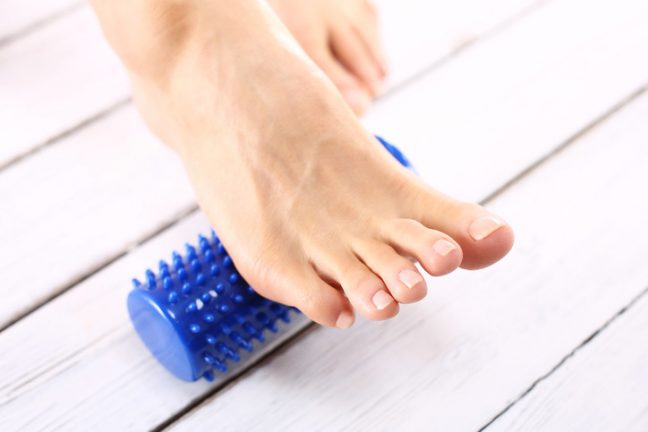
- Strengthening the muscles of the foot and calf in conjunction with stretches have been shown to have good results. Using a tool such as the Fasciitis Fighter can specifically target the right area to improve results. A Physiotherapist can help guide you through an appropriate exercise regime. See here for suggested exerices using the Fascitis Fighter which is available for sale in the clinic.
Book Your Physiotherapy Appointment Today
 Conveniently located in West Lakes
 Call 8347 2043
- Wearing supportive shoes with arch support will usually help.
- Silicon gel heel pads, heel cups or over the counter orthotics are often beneficial. Evidence suggests that custom orthotics do not offer superior results to the ready made orthotics (Landorf et al. 2006).
- If your symptoms are worse in the morning after your regular exercise activity, consider reducing the amount you do initially.
- Rolling your foot on a jar full of frozen water, especially after activity may help.
- Weight loss
No Improvement with these simple measures?
If after 6 – 8 weeks there is no improvement, then you will need some extra help from a Physiotherapist, Podiatrist or General Practitioner. Recommended treatments at this stage include:
- Deep myofascial release
- Dry needling
- Taping to unload the plantar fascia
- Cortisone injections can offer short-term relief, but you need to consider the potential side effects of fat pad atrophy and plantar fascia rupture (Tatli & Kapasi, 2009). The reduction in symptoms can provide an opportunity to commence an exercise program to work towards long-term solutions for the pain.
- Other injection options include Botox and platelet-rich plasma.
- Night splints or socks (Strassburg Sock) to stretch the plantar fascia overnight may be worth trying and can help the morning pain. Sleeping in the brace may be challenging, so you have to way up the pros and cons.
Still NO Improvement?
If no improvement after a further period of 6 -8 weeks of assisted treatment, other options include:
- Extracorporeal shockwave therapy. The evidence surrounding this treatment is mixed, but more recent studies suggest that it can be beneficial in this chronic phase, particularly in runners.
- Referral to a foot and ankle specialist for consideration of surgical options.
In summary, plantar fasciitis can be a challenging problem to settle. We suggest seeking treatment within the first 12 weeks if your self-help strategies are not working.
Click here for Plantar Fasciitis Fact Sheet
Updated by Physiotherapist Sandy Woolman (March 2026)






Make an Appointment
COMPLEXICA BUILDING Level 1, 9 Charles St
West Lakes 5021
Call Us08 8347 2043